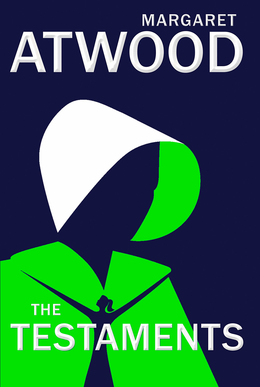
The Testaments: Why Daisy Isn't Nichole & Her Real Identity Revealed
The highly anticipated Hulu series, The Testaments, plunges viewers back into the oppressive world of Gilead, charting a course four years after June Osborne's daring rescue of Boston's Handmaids. While the sequel novel by Margaret Atwood offered a clear lineage for its central characters, the television adaptation is already making significant narrative changes, particularly around the mysterious figure of Daisy. As the story shifts focus to a new generation, the question of Daisy's true identity and, more pressingly, who are Daisy's parents in the Hulu series?, has become a central enigma, captivating fans and sparking intense speculation.
Unlike the definitive answers found within the pages of Atwood's novel, the show's approach is designed to keep us guessing. This article will delve deep into what the series has revealed so far, dissecting the popular theories, clarifying why Daisy simply cannot be Nichole, and exploring the implications of these creative departures for the future of Gilead's unfolding saga.
Unraveling Daisy's True Identity and Her Tragic Past
From her very first appearance in The Testaments, Daisy is a character shrouded in intrigue. Initially presented as a "Pearl Girl," seemingly a young woman drawn to Gilead for a better life, this facade quickly crumbles. We soon learn that Daisy is, in fact, a dedicated operative for Mayday, the underground resistance movement, tasked with infiltrating Gilead and gathering vital intelligence. Her mission immediately establishes her as a pivotal player in the fight against the totalitarian regime, but it also hints at a much deeper, more complex personal history.
The series reveals that Daisy was born within the confines of Gilead but was smuggled out as an infant, a testament to the enduring efforts of those fighting for freedom. She was lovingly raised in Canada by Neil and Melanie, who she believed to be her biological parents. Their tragic demise during a Gilead attack on their store serves as a catalyst, propelling Daisy into a quest for vengeance and answers. It is June Osborne herself who delivers the devastating truth about Daisy's origins, albeit leaving the crucial detail of her biological parentage a tantalizing mystery. This revelation ignites a fierce determination in Daisy, transforming her from a covert operative into a driven individual seeking justice for a life stolen and a family lost.
This early focus on Daisy's adoptive family and her recruitment by Mayday sets a distinct tone for the series, one that prioritizes immediate action and a fresh perspective on the resistance. It's a significant deviation from the source material, where Daisy's role and identity are intrinsically linked to the main protagonists, setting the stage for a narrative that promises unexpected twists and turns as viewers try to piece together her fragmented past.
Why Daisy Isn't Nichole (Holly): Debunking a Popular Theory
One of the most persistent fan theories surrounding Daisy's identity was the idea that she might actually be Nichole, June Osborne's second daughter, also known as Holly. Given the often ambiguous timelines of the original The Handmaid's Tale series, and the natural desire for viewers to connect new characters to established ones, this theory gained considerable traction. However, showrunner Bruce Miller has definitively put this speculation to rest, confirming to Deadline that Daisy is *not* Nichole.
The reasoning behind this categorical denial is rooted firmly in the show's established chronology. Let's break down the timeline discrepancies:
- Hannah vs. Nichole's Ages: In the first season of The Handmaid's Tale, Hannah was approximately eight years old. Nichole was not even conceived until later. This establishes a significant age gap, roughly nine to ten years, between the two sisters.
- Nichole's Age at Series End: By the conclusion of The Handmaid's Tale TV series, Nichole was still a toddler. For her to suddenly jump to a teenager by the beginning of The Testaments, which starts just four to five years after the liberation of Boston, would stretch the bounds of believability beyond repair. The math simply doesn't add up.
- Hannah's Accelerated Aging: While Hannah did appear to age somewhat rapidly in The Handmaid's Tale to fit the narrative demands, Nichole's progression has remained more consistent with real-world time.
The show's decision to shrink the age gap between Daisy and Agnes (June's other daughter, Hannah) to only a year or two further solidifies this impossibility. Had Daisy been Nichole, the age difference with Agnes would have been far more substantial. It's an important clarification, as it dramatically alters the potential family dynamics and narrative arcs for all three young women. While the actress playing Daisy, Lucy Halliday, bears a striking resemblance to what June's teenage daughter might look like, even mirroring some of her mannerisms, this visual irony only underscores the narrative choice to keep them separate. This means Daisy and Agnes will not share the profound experience of discovering they are sisters through their shared mother, June, a significant divergence from the book's narrative.
The Burning Question: Who Are Daisy's Biological Parents?
With the Nichole theory firmly debunked, the core mystery remains: who are Daisy's biological parents in The Testaments Hulu series? Unlike the novel, which explicitly names June Osborne (as Offred) and Nick Blaine as her parents, the show has deliberately withheld this crucial information. This narrative choice opens a wide field of speculation and strengthens the show's independent identity.
June Osborne's cryptic knowledge further fuels the intrigue. We learn that June has known Daisy for a while, and was also familiar with Neil and Melanie, Daisy's adoptive parents. This suggests a pre-existing, significant relationship, one that goes beyond a casual acquaintance. June's awareness of Daisy's past hints at a deeper connection, implying she might know Daisy's true lineage or was involved in her smuggling out of Gilead. Was June a direct contact in the resistance who orchestrated the escape? Or is there a more personal, emotional link yet to be revealed?
Currently, fan theories are swirling, attempting to fill this parental void:
- Charlotte (Angela), Janine's Daughter: One popular theory posits that Daisy could be Charlotte, also known as Angela. Charlotte was Janine's daughter, taken in by the Putnam family. If Daisy were Charlotte, it would create another profound connection to a beloved character from The Handmaid's Tale and add another layer of tragedy and resilience to her story. This would also tie Daisy directly to a Handmaid, maintaining a thematic link to the original series.
- Another Handmaid's Child: It's entirely possible Daisy is the daughter of another Handmaid whose story we haven't fully explored, or perhaps even one who perished in Gilead. This would broaden the scope of the resistance and emphasize that many children were smuggled out, each with their own untold stories.
- A Completely New Lineage: The show could introduce a completely new set of biological parents for Daisy, further differentiating itself from the book and expanding the world of Gilead beyond the established characters. This would allow for fresh narrative avenues and character development unburdened by prior expectations.
The decision to keep Daisy's biological parents a secret is a strategic move, transforming the revelation into a key narrative driver. It emphasizes the pervasive loss of identity within Gilead and the enduring quest for truth that defines the resistance. As viewers, we are invited to join Daisy on her journey of self-discovery, piecing together the fragments of her past alongside her, making her quest deeply personal and emotionally resonant.
The Testaments: Book vs. Show – Daisy's Evolving Role and Impact
The foundational difference regarding Daisy's parentage highlights a critical divergence between Margaret Atwood's novel and Hulu's series adaptation. In the book, Daisy is unambiguously Nichole, June's daughter, and her discovery of this fact, along with her connection to Agnes, forms a significant emotional core of the narrative. The show's decision to alter this lineage, however, is not merely a cosmetic change; it fundamentally reshapes the character dynamics and thematic landscape of The Testaments television series. For a deeper dive into these specific differences, consider reading Daisy's Parents: The Testaments Book vs. Show Differences Explained.
By making Daisy a child whose biological parents remain unknown, the series achieves several narrative advantages:
- Heightened Mystery and Suspense: The ongoing search for Daisy's true heritage creates a powerful central mystery that engages viewers and provides long-term storytelling potential.
- Broader Thematic Exploration: Instead of focusing solely on June's immediate family, the show can explore the wider impact of Gilead on its stolen children – children smuggled out, raised in ignorance, and now returning to confront their pasts. This allows for a more expansive view of the resistance.
- Redefining Relationships: The absence of a shared mother dramatically alters the dynamic between Daisy and Agnes. Their relationship will develop based on shared experiences in the resistance and their individual struggles within Gilead, rather than a pre-determined familial bond. This offers fresh narrative possibilities for their sisterhood, perhaps forged through chosen connection rather than blood.
- Creative Freedom: This change grants the showrunners immense creative freedom to craft Daisy's backstory and future arc in ways that best serve the television format, without being strictly bound by the novel's revelations.
This creative license signals that while the show draws inspiration from Atwood's vision, it is committed to forging its own path, offering a fresh, and at times, more immediate, exploration of Gilead's crumbling foundations. It also emphasizes that the fight against Gilead is a multi-generational struggle, encompassing countless individuals whose personal stories, like Daisy's, are yet to be fully told.
Navigating the Shifting Sands of Gilead's Future
As The Testaments unfolds, the decision to keep Daisy's biological parents a mystery, and firmly establish her as separate from Nichole, offers both challenges and exciting opportunities for viewers and the narrative alike. For fans deeply invested in Atwood's original work, these changes require an open mind, encouraging us to embrace the show's unique vision and its independent narrative trajectory. This is not merely a retelling but a re-imagining, designed to captivate a new generation of viewers while offering fresh insights to long-time fans.
Tips for viewers engaging with The Testaments:
- Embrace the New Narrative: Approach the series as a distinct entity from the book. While the core themes remain, the specific character relationships and plot points may diverge significantly.
- Look for Clues: Pay close attention to dialogue, character interactions, and subtle hints regarding Daisy's past. The show is likely to drop breadcrumbs that will eventually lead to the reveal of her true parentage.
- Engage with Fan Communities: Discussing theories and observations with other viewers can enrich your understanding and enjoyment of the series.
- Appreciate the Expanded Universe: The show's creative decisions allow for a broader exploration of Gilead's impact and the diverse experiences of those resisting it, highlighting stories beyond June's immediate circle.
The ambiguity surrounding Daisy's identity becomes a powerful symbol of the many children lost, stolen, or hidden during Gilead's reign. Her journey is not just about personal revenge but represents the collective yearning for truth and identity for an entire generation raised in the shadow of tyranny. This strategic narrative shift ensures that the question of "Who are Daisy's parents in The Testaments?" will remain a compelling driving force, ensuring that viewers are eagerly anticipating every new revelation.
Conclusion
The Testaments Hulu series has firmly established Daisy as a character separate from Nichole, June Osborne's younger daughter, a clear departure from the novel. While her adoptive parents, Neil and Melanie, met a tragic end, the mystery of Daisy's biological parentage remains one of the show's most gripping enigmas. This deliberate narrative choice allows the series to carve its own path, offering a fresh perspective on the fight against Gilead and deepening the personal stakes for its young protagonists. As Daisy embarks on her quest for vengeance and truth, viewers are left to speculate on her origins, ensuring that the question of who are Daisy's parents in The Testaments will continue to fuel discussion and anticipation as the dramatic story of Gilead's downfall unfolds.